
Brake noises are your car’s way of signaling trouble. In short, squeals, grinds, or clunks during braking usually mean a brake component is worn or off track. The most common culprit is worn brake pads – their built-in metal “wear indicator” often scrapes the rotor and makes a sharp squeal when the pads get thin. Other causes include debris or rust on the rotors, dry or contaminated brakes, or loose hardware. For example, a high-pitched squeal often means the pads are nearly worn through, while a deep grinding noise means the pads are gone and metal is grinding on metal. In any case, these sounds are warnings to check your brakes soon for safety.
Brake pads and rotors work together to stop your car. Over time or in bad conditions, things like dirt, moisture, or a warped rotor can make noise. Left unchecked, noisy brakes can lead to bigger problems or unsafe stopping. But most brake noises are common and can be fixed – from a quick cleaning to replacing pads and rotors. Below we explain the main brake sounds, what causes them, and how to fix each one (or when to see a mechanic).
High-Pitched Squealing or Screeching
High-pitched squeals or screeches when braking usually point to worn pads or minor contamination. Most brake pads have a small metal tab (wear indicator) that rubs the rotor and creates a squeal to warn you the pad is almost gone. Common reasons for squealing:
- Worn Brake Pads: As pads wear, the metal clip touches the rotor and squeals. This is a deliberate signal that it’s time for new pads.
- Glazed or Contaminated Pads/Rotor: Sometimes pads or rotors get glazed (smooth and hardened) from overheating, or dirt, brake dust, or oil can stick to them. A little dirt or moisture can cause a temporary squeak. A rain-fresh or dusty environment often causes squealing that stops after a few stops.
- Pad Material & Shims: Cheap or high-metal-content pads often squeal more. Some pads vibrate against the rotor and produce noise, especially if their anti-rattle shims are worn.
Fix: Wipe any obvious dust off the pads/rotors and apply proper brake lubricant to the pad edges (never on the pad face). If squealing persists, replace the pads (and rotors if needed). Upgrading to higher-quality or ceramic pads can also reduce noise. New pads often squeak for the first few stops as they “break in”, so some early noise can be normal if everything else is in good shape.
Grinding or Metal-on-Metal
A grinding, growling, or metal-on-metal sound when you brake is more serious. This usually means the brake pads have worn out completely, letting metal rub directly on the rotor. Grinding sounds are urgent because metal-on-metal contact can badly damage the rotor (and caliper) very quickly. The noise often gets louder as you continue braking.
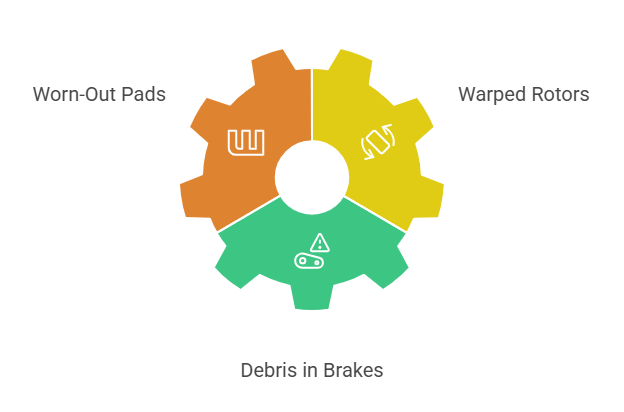
Common causes of grinding:
- Worn-Out Pads: If pads wear down to the backing plate, you’ll hear a loud grind. The pads might still look OK from above, so it’s best to have them checked if you hear grinding.
- Warpped or Grooved Rotors: Uneven or warped rotors can grind against even good pads. A warped rotor caused by overheating will make a gritty noise and cause pedal vibration.
- Debris in Brakes: Sometimes a small rock or piece of rust (especially after winter) gets stuck between the pad and rotor, causing a brief grinding or scraping noise.
Fix: Stop driving as soon as it’s safe. Grinding usually means brake failure is imminent. Have your car towed to a mechanic. You’ll need new brake pads and most likely new or resurfaced rotors. Driving even a short distance with grinding brakes can destroy your rotors (or brake drums).
Thumping, Vibrating, or Pulsing
If you feel a thump, thud, or vibration through the brake pedal or steering wheel when braking, it usually points to warped rotors or brake drums. Over time, heavy braking can unevenly wear rotors so they’re no longer perfectly flat. Every time the warped section hits the pads, you’ll feel a rhythmic thumping or pulsing. This feels like the car is “shuddering” when you slow down.
Likely causes:
- Warped Rotors/Drums: Heat and uneven pressure cause rotors or drums to warp. One side of the rotor might be slightly bent, so it contacts unevenly.
- Wheel Bearing or Suspension Issues: Unusual thumps (especially at low speed or over bumps) might also come from worn wheel bearings or suspension parts, but if it happens while braking, rotors are often to blame.
Fix: Warped rotors usually need resurfacing or replacement. A machine can mill them flat if there’s enough thickness left. Brake drums (in older cars) may need turning or replacement. A professional brake shop can smooth or replace the rotors/drums to restore a smooth surface. Also check for uneven pad wear or sticky calipers, which can cause the same vibration.
Inspecting brake components. Loose or damaged brake parts can also cause noise. For example, a loose caliper bolt or worn suspension bushings can clunk or rattle when you stop, even if the brake system itself is fine. Below are other noises to listen for.
Clunking, Rattling, or Rubbing
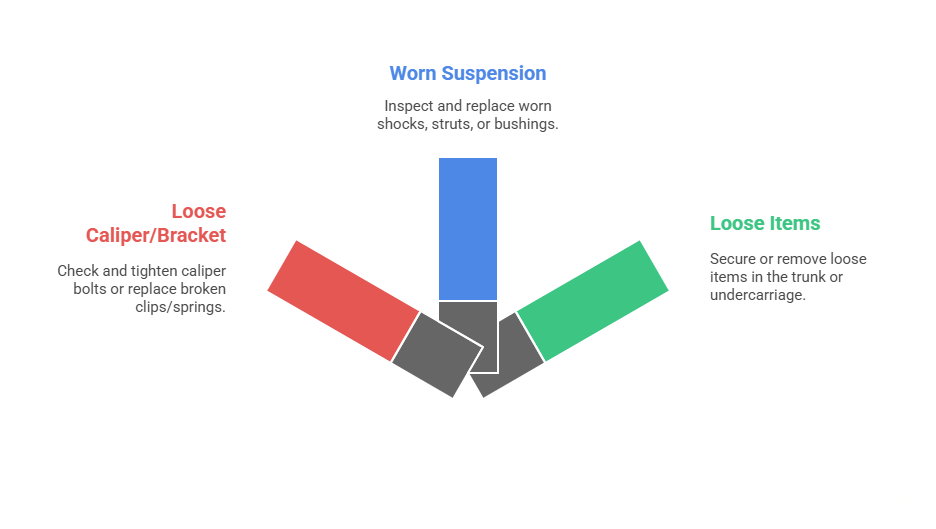
Clunking/thumping sounds (like something hitting or dropping) when braking are often suspension or hardware issues, not the pads. Rattling might mean something is loose. Common culprits:
- Loose Caliper or Bracket: If a caliper bolt is loose, the caliper can bang against the rotor or mounting bracket when braking. A broken pad clip or anti-rattle spring can also cause a rattling sound if pads move.
- Worn Suspension Parts: Worn shocks, struts, or bushings allow the car to “nod” (nose-dive) under braking, which can produce a clunk. Engine or transmission mounts and sway bar links can similarly clunk under braking force.
- Other Loose Items: Rarely, items in the trunk or undercarriage can shift and rattle when you stop hard.
Fix: Inspect and tighten any loose brake hardware (bolts, clips, pins). If suspension parts are worn, replacing shocks/struts or bushings will fix the noise. Ask a mechanic to check the braking and suspension if you hear clunks. It’s usually safe to drive short-term, but fix soon: loose parts can lead to uneven braking.
Chirping or Hissing
Some brakes chirp or whistle under light braking or even coasting. This can be due to:
- Brake Wear Indicator: Some pads have a small shim or tab that can chirp even when pads still have life. If so, it’s a softer warning that pads will need service.
- Debris or Stick: A small stone or strip of debris stuck near the rotor can make a rhythmic chirp as it hits the spinning rotor each turn.
- Brake Fluid/Air Issues: Whistling or hissing (especially while applying or releasing the brake) can indicate air in the brake lines or a fluid leak. For example, a low fluid level or a loose line connection can hiss. This is more rare but serious if brakes feel spongy.
Fix: Check for any foreign object contacting the wheel or rotor and remove it. If the noise stops when you apply the brakes, it was probably the wear indicator (meaning pad change is near). If you suspect air or fluid (whistling under braking), stop driving and have the brake hydraulic system inspected and bled.
Moisture and Rust Noises
It’s normal to hear a brief squeak or moan after rain or overnight parking. Nighttime dew or winter humidity can leave a thin layer of rust on rotors. The first few stops scrape off the rust and cause a low-pitched squeal or moaning sound. This noise usually disappears after a few brake applications as the rust wears away. You can usually ignore this short-lived noise, but heavy, uneven rust buildup on old rotors might need attention (a shop can clean or resurface rusty rotors).
What to Do and When to Seek Help
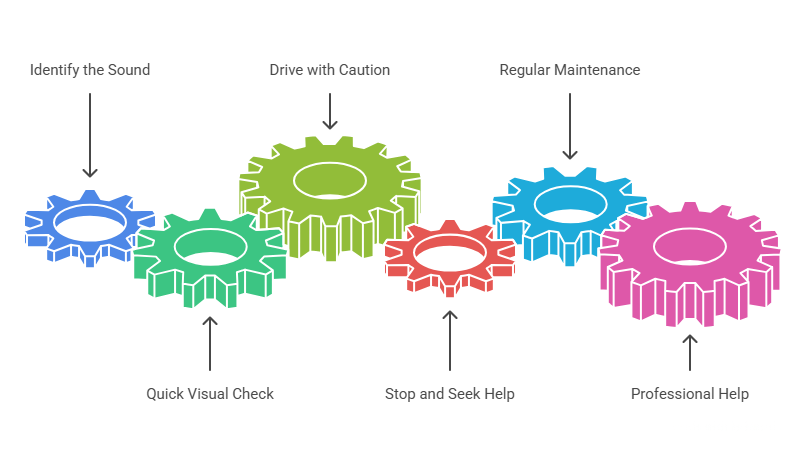
- Identify the sound: Pay attention to when and how it happens (squeal vs. grind, only once or every stop). This clues you into the cause.
- Quick visual check: If you can safely jack up the car or remove the wheel, peek at pad thickness through the caliper – thin pads (<3mm) need replacing. Look for obvious debris, fluid leaks, or broken clips.
- Drive with caution: Squeals or chirps (from wear indicators or minor debris) often allow a careful trip home. But never ignore grinding or clunking noises – stop and get it checked immediately. Grinding usually means the brakes are dangerously worn.
- Maintenance: Regular brake inspections (every 10,000–15,000 miles) catch wear early. Keeping brake hardware greased and using the right pad type can prevent noise.
- Professional help: If you’re unsure, or the noise persists after basic cleaning/inspection, take the car to a mechanic. They can pinpoint issues like warped rotors, bad bearings, or air in the lines. Safety first – properly functioning brakes are critical.
The table below summarizes common brake noises, likely causes, and suggested fixes:
| Noise/Symptom | Possible Causes | Suggested Action |
| High-pitched squeal or squeaking | Worn brake pads (wear indicator engaged); dust, moisture, or glaze on pads/rotors; pad shim vibration | Clean brakes of dust/debris; replace worn pads; use proper brake lube on hardware; consider higher-quality pads. |
| Grinding (metal-on-metal) | Brake pads completely worn; deep grooves or warped rotors | STOP driving. Replace brake pads and resurface or replace rotors immediately. |
| Thumping/vibration (pulsing) | Warped or uneven rotors/drums; stuck caliper; wheel bearing | Resurface or replace rotors/drums. Check and fix caliper function or wheel bearings. |
| Clunking/thumping (suspension) | Loose caliper/bracket; worn shocks/struts or bushings; broken clips | Tighten/replace loose brake hardware. Inspect and replace worn suspension parts. Secure any loose items. |
| Rattling | Loose pad clips, caliper hardware, or heat shield; worn brake hardware | Inspect and replace broken clips or hardware. Tighten caliper bolts. |
| Whistling/hissing (while braking) | Air in brake lines; low brake fluid; leaking line | Stop driving. Check brake fluid level; bleed brakes to remove air; repair any leaks. |
| Moaning (low-pitch squeal) | Moisture/rust on rotors; pad shim contact | Drive a short distance to clean off rust (moisture). If it persists, have brakes inspected. |
FAQ
- Q: Is it safe to drive if my brakes are making noise?
A noisy brake doesn’t always mean you must stop immediately, but you should be cautious. Squeals or chirps (from wear indicators or light dust) usually let you drive home carefully to get service. However, grinding or clunking noises mean a serious problem — stop driving and have the brakes inspected right away. If braking performance feels normal despite the noise, you can move slowly to a safe spot, but ignore no brake noise. - Q: My new brake pads are squeaking. Is something wrong?
A little squeak from new pads can be normal. New pads need a “break-in” period to seat properly, and they often squeak for the first few stops. Also, overnight condensation can rust new rotors quickly, causing initial noise. If the squeak goes away after a few miles of gentle braking, it’s likely nothing serious. However, if new brakes keep squealing loudly, check that they’re installed correctly (with proper shims and lubrication) or consult the shop that installed them. - Q: Why do my brakes only make noise after it rains or in the morning?
Rain or heavy moisture can cause surface rust or damp brake dust to build up on the rotors. When you first brake, this causes a brief squeak or moan. Usually, the sound stops after driving a short distance as the rust/dirt gets worn off. If the noise persists, have the brakes checked. - Q: What does a grinding noise when braking mean?
Grinding usually means your brake pads have worn out and the metal backing is contacting the metal rotor. It’s a serious alert – driving even a little farther can ruin the rotors. Address it immediately by replacing the pads (and likely the rotors) to restore safe braking. - Q: How can I stop my brakes from squeaking?
First, determine the cause: often cleaning helps. Remove wheels (if you can) and clean brake dust from pads and calipers. Apply high-temp brake grease to the pad backing plates and caliper pins (not the pad surface) to damp vibrations. If pads are glazed or too worn, replace them. Upgrade to pads with noise-reduction features (shims or chamfers) and keep brake components well-lubricated to prevent squeal. - Q: Can cheap brake pads cause noise?
Yes. Low-quality or semi-metallic pads can be noisier. They wear unevenly and vibrate more. Investing in higher-grade or ceramic pads often means quieter brakes. Always choose pads that suit your vehicle and driving style.
By paying attention to the type of brake noise and following the checks above, you can often identify the issue early. Timely brake maintenance keeps your stops safe and quiet. When in doubt, have a qualified mechanic inspect your brakes – it’s the safest way to ensure those noises don’t turn into a bigger problem.