
If your car was dented by a hailstorm, don’t panic – most hail dents can be repaired. For small, shallow dents (with no cracked paint), many DIY fixes exist. The most popular solution is paintless dent repair (PDR) – a method that gently pushes or pulls the metal back into shape without repainting. In fact, professionals widely regard PDR as the best approach for hail damage: it preserves the original paint finish, is faster and less expensive than traditional repairs. If paint is chipped or dents are large/deep, however, you’ll need a full body-shop repair (filling, sanding and repainting). Below we cover both DIY techniques and professional options so you can restore your car safely and effectively.
Assess the Damage
Begin by carefully inspecting your car for dents and paint damage. Walk around the vehicle in daylight, looking for dings on the hood, roof, doors and trunk. Small dents (about the size of a quarter or smaller) without paint damage are usually cosmetic. Larger dents, especially where the paint is cracked or missing, are more serious because they can expose bare metal and lead to rust. For example, even tiny cracks let moisture in, so fixing these quickly prevents long‑term corrosion.
Also, note the location of the dents. Dents on flat panels or doors are easier to fix than those on rounded roof panels or hard-to-reach corners. If many panels are affected or the hood/roof is heavily dented, professional repair is usually best. Finally, check your insurance coverage. Hail damage is generally covered under comprehensive car insurance, so file a claim if repair costs exceed your deductible. In summary: minor, paint‑intact dents you may tackle yourself, but large or paint‑damaged dents merit a pro’s attention.
DIY Hail Dent Repair Methods
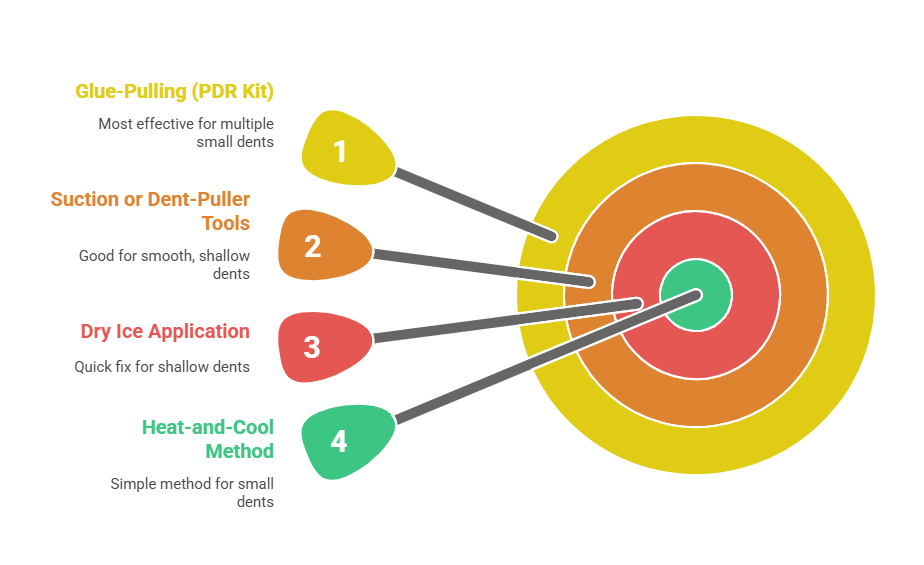
If the dents are small and the paint is intact, you can try at-home fixes. Always clean the area first (wipe with isopropyl alcohol to remove wax and debris) so tools or adhesives will grip properly. Some common DIY methods include:
- Heat-and-Cool (Hot/Cold) Method: Warm the dented metal first (e.g. use a hairdryer or heat gun) to make it expand, then rapidly cool it (with an ice pack, compressed air, or dry ice). The sudden contraction can pop the dent out. For instance, point a hairdryer on the dent for a minute or two (careful not to overheat), then apply ice or a cold spray. Repeat as needed. Caution: Experts warn that overheating can damage paint, so don’t stay on one spot too long.
- Dry Ice Application: Similar to above, gently rub a piece of dry ice over the warmed dent. This super-cold contact often makes shallow dents spring back. Keep safety in mind (wear gloves and eye protection when handling dry ice).
- Suction or Dent-Puller Tools: Simple suction-cup dent pullers can sometimes pull out moderate dents. Attach the cup to the center of the dent and pull firmly to even out the surface. Specialized DIY kits often include a small slide-hammer or plunger tool. These kits may also come with glue tabs (see next point). Suction works best on smooth, shallow dents; it won’t fix sharp creases.
- Glue-Pulling (PDR Kit): Paintless dent repair kits use hot-melt glue and plastic tabs to “pull” dents. You glue a tab onto the dent, let the glue harden, and then use a bridge puller or slide hammer to pull the metal back. It’s important to use the right glue, tab size, and to clean the surface first. This method can be very effective on multiple small dents, but it takes practice. After pulling, any glue residue can be removed with alcohol. (Note: We didn’t find a free-source link for this step-by-step, but many PDR kit manuals illustrate the process.)
Each DIY method has limits and risks. CarParts.com specifically warns that while heat + dry ice can work, it can ruin paint if done wrong. If at-home efforts aren’t making progress (or if paint cracks appear), stop and consider professional help. In general, DIY is best saved for very small, shallow dents.
Professional Repair Options
For most hail damage, a professional auto body shop offers two main methods:
- Paintless Dent Repair (PDR): This is the preferred method when the paint is still intact. Trained technicians access the backside of each dented panel (often by removing interior trim or lights) and gently massage the metal back into place. This “massaging” (with long, thin rods and light hits on the outside) restores the metal to its original shape without repainting. The big advantages: it preserves your factory paint (no color-matching needed) and is usually faster and cheaper than body filler work. A good PDR shop will treat hundreds of tiny hail dents in just a few hours.
- Traditional Body Repair: If the hail dents are very deep or the paint is cracked/chipped, PDR alone may not suffice. In those cases, the damaged panel must be repaired with body filler (to even out the deep dent), then sanded, primed, and repainted. This process fully fixes the dent but is more costly and time-consuming. It also requires a precise paint match. In practice, a shop might combine methods: use PDR on what it can, then fill/sand/repaint only the worst dents or corners.
In either case, professional shops bring expertise and tools to the job. They’ll check that panels line up correctly after repair, and the new paint (if used) matches exactly. Many reputable shops offer a warranty on their work. (For example, Key Collision Center notes that body shops often have repair guarantees and handle insurance claims directly.) Finally, an auto shop can assess the damage you might have missed and ensure there’s no underlying structural harm.
When to Call a Professional
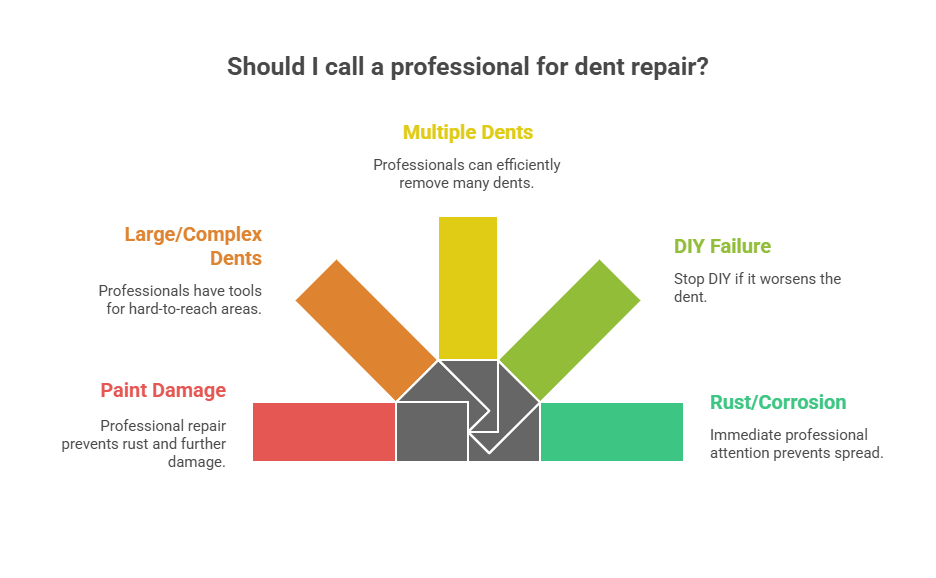
While a minor ding might be tempting to fix yourself, some situations require professional attention:
- Paint Damage: Any dent that cracks, chips or breaks the paint should be handled by pros to prevent rust.
- Large or Complex Dents: If a hailstone left a big dent (golf-ball size or larger) or dents in tricky areas (roof curves, near window seams, etc.), DIY tools likely won’t reach all spots.
- Many Dents: A few dents are one thing, but dozens can be overwhelming. Professionals with PDR tools can remove multiple dents far faster than any home method.
- Limited DIY Success: If your DIY efforts aren’t smoothing the dent (or are leaving pulls/marks), stop. Overworking the metal or paint can make problems worse.
- Rust or Corrosion: If the bare metal is exposed or rust has started, get it fixed professionally right away to avoid it spreading.
In short, if you have any doubt about doing it yourself, it’s safer to seek a qualified repair shop. Certified technicians have years of experience and special PDR tools to fix dents cleanly. They’ll also work with your insurer: many shops will even file the hail damage claim for you (so you can get your deductible reimbursed).
Insurance and Cost Considerations
Most comprehensive auto insurance policies cover hail damage. Check your deductible: if the repair cost is only a few hundred dollars and your deductible is higher, you might skip the claim. But if dozens of dents need fixing, claims are common. Body shops can provide a repair estimate to give to your insurer. The process typically involves: 1) filing a claim for hail damage, 2) having a shop or appraiser inspect and estimate, and 3) scheduling the work once approved.
Repair costs vary widely: individual small dents might cost $30–50 each by PDR, but a full hail repair could run into the thousands if many panels are affected. Remember, fixing hail promptly prevents rust and preserves your car’s value. Even if you plan to handle repairs yourself, file the claim first so you know what’s covered.
Restoring Your Car
Hail damage doesn’t have to linger. With the right approach, you can return your car to pre-storm condition. For minor dents, try the DIY tips above carefully. But for best results or any serious damage, hire a pro. ASE‑certified technicians (like those at Complete Diesel & Automotive in Zachary) have the skills and tools to make hail dents vanish. They also stand behind their work with warranties.
Don’t delay: the sooner you address hail dents, the less chance of rust or insurance issues. Whether you tackle it in your driveway or call the pros, a dent-free car is within reach. Contact Complete Diesel & Automotive today for a free estimate or consultation. Our expert team will help you decide the best repair plan and get your car looking like new again – guaranteed.